
Short answer: You can legally sell a house in New Jersey without a Realtor, but you still pay the state realty transfer fee, your attorney, the smoke certificate and any town resale inspections, and you may still pay a buyer’s agent. You also take on the disclosure paperwork, pricing, marketing and negotiating yourself.
Saving the listing commission is the usual draw of selling for sale by owner (FSBO). It can work, especially when you already have a buyer lined up. But the commission is only one line on the closing statement, and several New Jersey costs and obligations stay with the seller no matter who handles the sale. Here is what selling a house in NJ without a Realtor really involves.
How common is selling without an agent?
Not very, and it is getting rarer. In the National Association of Realtors’ 2025 Profile of Home Buyers and Sellers, for-sale-by-owner sales made up 5 percent of transactions, a record low. The typical FSBO home sold for $360,000, compared with $425,000 for agent-assisted sales. Those two groups are not identical homes, so the gap is not a precise measure of what an agent adds, but it is worth knowing before you assume going solo saves money.
Costs you pay with or without a Realtor
| Cost | Who sets it | What to expect |
|---|---|---|
| Realty transfer fee | State of New Jersey | Paid by the seller when the deed is recorded; roughly $5,185 on a $600,000 sale and $6,775 on a $750,000 sale |
| Graduated “mansion tax” | State of New Jersey | Now paid by the seller on sales over $1 million, from 1% to 3.5% of the price |
| Seller’s attorney | Your attorney | Varies; in a FSBO sale the attorney usually drafts the contract, so expect more work |
| New Jersey smoke cert | State fee schedule or your town | $45, $90 or $161 under the state schedule, depending on how early you apply |
| Town resale inspection or certificate | Your municipality | Required in some towns; fees and rules vary |
| Buyer’s agent compensation | Negotiated | Not required, but buyers may ask sellers to cover it |
The realty transfer fee
The NJ Division of Taxation imposes the realty transfer fee on the seller when the deed is recorded. For sales over $350,000 it is charged per $500 of the price in tiers: $2.90 on the first $150,000, $4.25 from $150,000 to $200,000, $4.80 from $200,000 to $550,000, $5.30 from $550,000 to $850,000, $5.80 from $850,000 to $1 million and $6.05 above $1 million. Applying those tiers gives about $5,185 on a $600,000 sale and $6,775 on a $750,000 sale. Some senior, disabled and low-income sellers may qualify for reduced rates, which your attorney can confirm.
The mansion tax moved to sellers
Under P.L.2025, c.69, the graduated percent fee on sales over $1 million is now legally imposed on the seller for deeds recorded on or after July 10, 2025. The rate is 1 percent from $1 million to $2 million, rising in steps to 3.5 percent above $3.5 million. Our post on the NJ mansion tax for sellers has the full table.
Paperwork you handle yourself
Disclosures. New Jersey’s property condition disclosure law, P.L.2024, c.32, took effect August 1, 2024. It says that when a seller has no brokerage firm, the seller must give the buyer the disclosure statement before the buyer is bound by the contract. The flood-risk questions added by P.L.2023, c.93 apply to all sellers too.
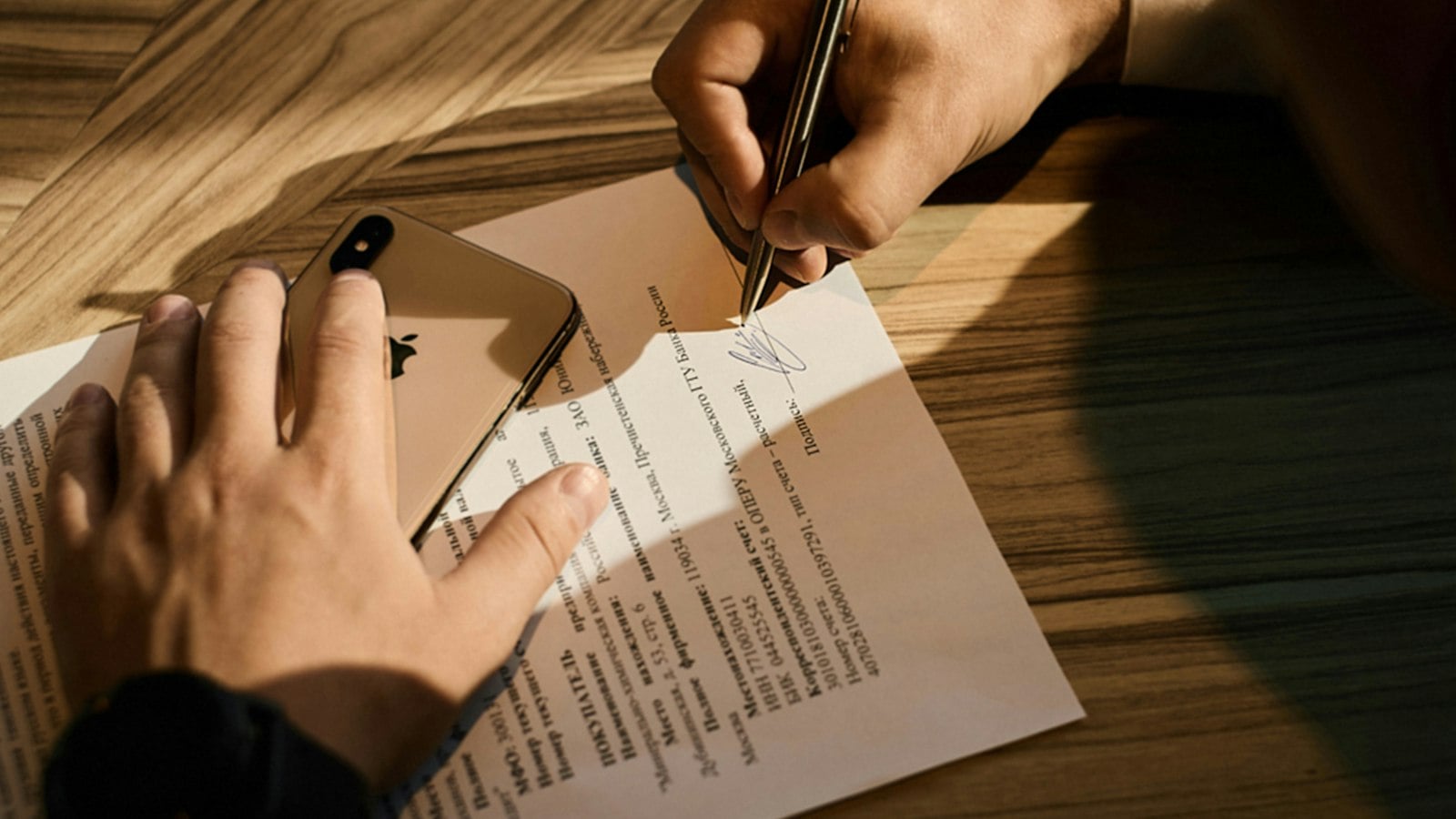
The contract and attorney review. The familiar three-business-day attorney review clause is required in contracts prepared by real estate licensees. In a FSBO sale, an attorney usually drafts the contract instead, so the timeline and protections depend on what the attorneys put in writing. Read our guide to NJ attorney review to see what normally happens in that window.
Certificates. You will need a New Jersey smoke cert, and possibly a town resale certificate of occupancy. Apply early: under the state schedule, the smoke cert fee rises from $45 to $161 if you wait until the last few business days.
Getting buyers to see your home
The multiple listing service is where brokerages share listings with each other and with the buyers they represent. Garden State MLS rules allow only participating brokerages and their authorized users to enter listings, so a FSBO seller who wants MLS exposure has to go through a broker, for example a limited-service listing. Without it, you are relying on signs, social media and FSBO websites.
Buyers who work with an agent bring that relationship to your sale. Since NAR’s practice changes took effect August 17, 2024, offers of buyer-agent compensation can’t appear on the MLS, and buyers must sign a written agreement with their agent before touring. Buyers may ask the seller to cover some or all of their agent’s fee as part of the offer. You can say no, but it may narrow your buyer pool. Our breakdown of Realtor fees in NJ explains how compensation works today.
The costs that don’t show up on a closing statement
- Pricing. In Morris County, single-family homes sold for a median of $773,000 in October 2026 and spent a median of 31 days on the market, according to NJ REALTORS. Pricing too high costs weeks; pricing too low costs money you never see.
- Negotiation. Inspection credits, appraisal gaps and mortgage contingencies are where many deals are won or lost.
- Time and safety. You schedule every showing, answer every call and screen every buyer yourself.
If speed matters more than top dollar, compare a FSBO sale with a cash offer versus a traditional listing, and see our full list of NJ seller closing costs.
This article is general information, not legal or tax advice. Confirm fees, exemptions and contract terms with your attorney or accountant before you sell.
Frequently asked questions
Can I sell my house in NJ without a Realtor?
Yes. New Jersey does not require a real estate agent to sell a home. You still need to handle the state disclosure statement, a New Jersey smoke cert, any town resale inspections and the realty transfer fee, and it is common to hire an attorney to prepare the contract.
Do I need a lawyer to sell my house in New Jersey without a Realtor?
It is strongly advisable. Without a listing agent, there is no agent-prepared contract, so an attorney typically drafts the sale contract and handles the closing documents.
Who pays the realty transfer fee in NJ?
The seller. The NJ Division of Taxation imposes the fee on the seller when the deed is recorded. On a $600,000 sale it comes to about $5,185 under the standard rates.
Do I have to pay a buyer’s agent if I sell my house myself?
No law requires it, but since August 2024 buyers sign agreements with their own agents and may ask the seller to cover that fee in their offer. Whether to agree is a negotiation.
Sources
- NAR: FSBOs reach all-time low (2025 Profile of Home Buyers and Sellers)
- NJ Division of Taxation: Realty Transfer Fee FAQs
- NJ Division of Taxation: Graduated Percent Fee notice (P.L.2025, c.69)
- P.L.2024, c.32 (property condition disclosure)
- NJ Division of Consumer Affairs: disclosure and flood risk regulations
- N.J.A.C. 11:5-6.2 (attorney review clause in licensee contracts)
- N.J.A.C. 5:70-2.9 (smoke certificate fees)
- Garden State MLS Rules and Regulations
- NAR: August 17, 2024 practice changes
- NJ REALTORS: Morris County Local Market Update, October 2026
Talk to the MorrisAgent Team
Thinking about selling on your own? We’re happy to talk it through, even if you decide to go FSBO. Our team has sold homes for up to $130,000 over asking, markets to a database of 50,000+ buyer contacts, and responds to inquiries within minutes. Call (973) 200-4800, email [email protected], or stop by our office at 518 Main Street, Suite 102, Boonton. No pressure, and no surprises.